WhatsApp has become an indispensable sales and customer-support channel for modern businesses in India and across the globe. Customers use it every day to ask questions, request pricing, view product catalogues, book appointments, and engage directly with sales teams.
However, receiving messages is not the same as generating measurable business results.
To understand whether WhatsApp is truly contributing to growth, businesses must track what happens after that very first message. How many people become leads? How many of those leads are qualified? How many book an appointment or request a quotation? And ultimately, how many convert into paying customers?
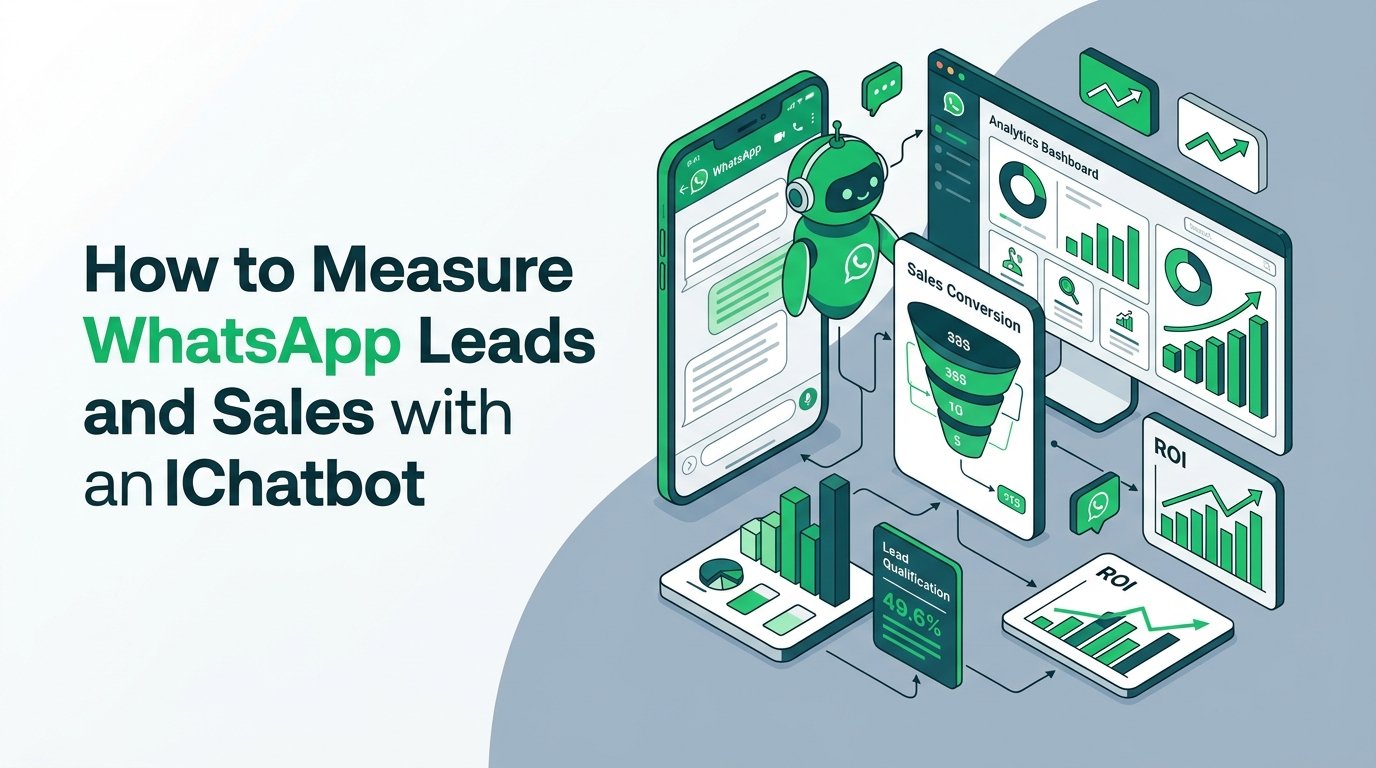
An AI chatbot answers these questions by handling conversations consistently, capturing prospect details, recording customer intent, and seamlessly connecting WhatsApp conversations to a structured sales pipeline. This comprehensive guide outlines how to measure WhatsApp leads and sales with an AI chatbot and how NanbaChatbot streamlines that entire process.
Why WhatsApp Lead and Sales Tracking Matters
Many businesses measure WhatsApp performance simply by tallying total messages or unread conversations. While these numbers reflect channel activity, they fail to reveal the complete customer journey.
A large influx of conversations may yield very few genuine opportunities if customer enquiries are neither qualified nor promptly followed up. Conversely, a focused, well-qualified stream of conversations can generate high-margin appointments and repeat sales.
A superior approach is to measure the movement from conversation to revenue. By monitoring each stage of the funnel, you can identify precisely where prospects drop off and where automation can tighten the sales cycle.
For instance, a business might find that customers receive lightning-fast replies but rarely complete appointment bookings. That insight proves the issue isn't response speed—the business may simply need clearer calls to action, better qualification questions, or a more frictionless calendar booking link.
What Is a WhatsApp Lead?
A WhatsApp lead is an individual who demonstrates potential purchase interest in your product or service during a chat. A simple initial greeting ("Hi" or "Hello") is not necessarily a qualified lead.
Stronger lead signals include explicit requests for pricing, specific product enquiries, service requirements, preferred locations, stated budgets, or appointment bookings.
An AI chatbot proactively identifies and collects these high-intent signals by asking structured, conversational questions:
- Customer Name & Contact Details: Capturing contact info directly from WhatsApp profiles and chat confirmations.
- Target Product or Service: What specific item, coaching batch, or service tier they are exploring.
- Location or Preferred Service Area: Crucial for local clinics, real estate, and delivery zones.
- Budget or Expected Purchase Value: Ensuring the enquiry matches the business's pricing model.
- Preferred Date or Appointment Window: Essential for consultations, showroom visits, or demos.
- Readiness to Speak with a Human Representative: Flagging hot leads ready for immediate closing.
The objective is never to interrogate the user with endless surveys, but rather to gather the essential data your team needs to determine the next sales action.
The 8 Most Important WhatsApp Metrics to Track
A reliable measurement system connects customer chat activity with tangible business outcomes. The following eight metrics provide a practical, high-impact framework.
1. Total WhatsApp Conversations
Track the volume of unique customer conversations initiated during a specific timeframe. Monitor this metric daily, weekly, and monthly to gauge promotional campaign impact and seasonal demand.
Note: Treat this as a top-of-funnel indicator. High volume alone does not equate to high-quality revenue.
2. Response Rate and Response Time
Response rate measures the percentage of incoming messages answered, while response time measures how long prospects wait before receiving assistance.
Studies consistently show that responding within 5 minutes yields up to a 21x higher qualification rate than responding after 30 minutes. NanbaChatbot responds in seconds around the clock, answering FAQs, presenting brochures, and keeping the dialogue alive even when your staff is off-duty.
3. Lead Capture Rate
The percentage of relevant customer conversations that yield a usable lead profile with contact details and verified interest.
Example: If your business receives 500 relevant WhatsApp enquiries and successfully captures 125 leads with valid names and requirements, your Lead Capture Rate is 25%.
4. Lead Qualification Rate
Not every captured lead holds genuine buying intent. The qualification rate calculates what portion of captured leads fulfill your core sales criteria (budget, timeline, location, and fit).
An AI chatbot asks polite qualifying questions, categorizing leads into mini-CRM stages so sales reps prioritize high-probability deals first.
5. Appointment or Demonstration Booking Rate
For dental clinics, coaches, agencies, and service providers, booking appointments is the primary conversion step.
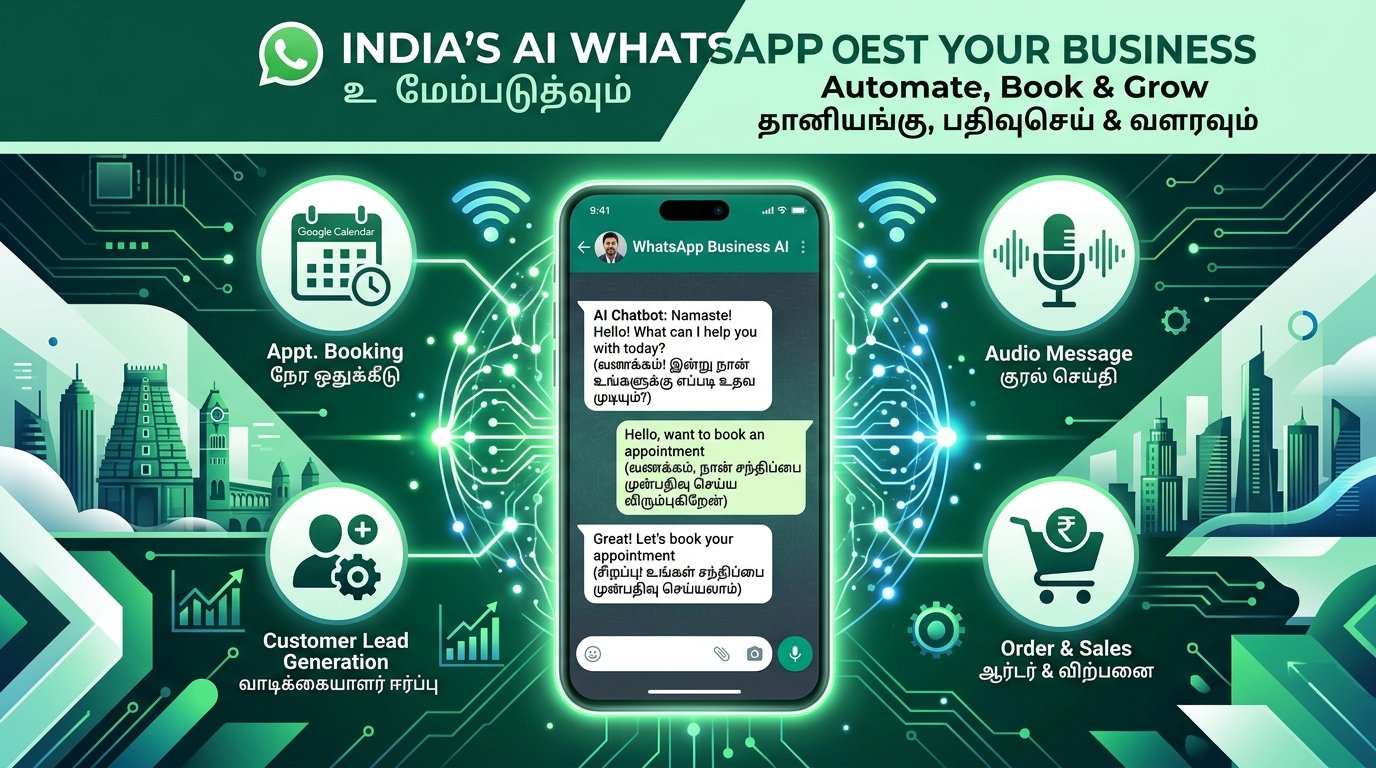
NanbaChatbot integrates directly with Google Calendar and Google Meet. As soon as intent is detected, the bot delivers an automated scheduling link, eliminating calendar friction.
6. Human Handoff Rate
Measures how frequently conversations transition from AI automation to human personnel.
Handoffs are not failures; high-value clients often seek human reassurance, bespoke proposals, or custom pricing. NanbaChatbot includes intelligent handoff detection, pausing automation as soon as a customer requests an agent so your team takes over smoothly.
7. Sales Conversion Rate
The proportion of qualified WhatsApp leads that ultimately become paying customers.
This directly validates your WhatsApp ROI. Tracking Won vs. Lost deals in a mini-CRM pipeline keeps the attribution crystal clear.
8. Revenue per WhatsApp Lead
The average rupee or dollar value generated by each captured WhatsApp lead.
Use this metric to compare WhatsApp performance against Meta Ads, Google Search, and email campaigns to optimize your marketing spend.
How an AI Chatbot Tracks the Customer Journey
Rather than relying on individual employees asking disparate questions, an AI chatbot ensures every prospective buyer experiences a consistent, data-backed onboarding flow.
Inbound Message
Customer reaches out regarding a product, price, or booking.
Instant AI Answer
Answers immediately using verified business training knowledge.
Qualification
Identifies exact needs, budget, preferred dates, or locations.
Lead Recorded
Stores customer profile, tags, and notes into the CRM pipeline.
Actionable Next Step
Shares PDF brochure, pricing sheet, or booking link.
Human Escalation
Hands off high-value negotiations to human agents seamlessly.
Deal Closed
Sales team updates stage to Won, Lost, or Follow-up.
Data Refinement
Insights are reviewed to refine bot responses and improve ROI.
How NanbaChatbot Helps Businesses Measure WhatsApp Performance
NanbaChatbot merges cutting-edge AI automation with enterprise-grade sales workflow tools built specifically for Indian businesses:
- One-Click Website & Document Training: Enter your website URL or upload PDF price sheets. The bot ingests your catalog instantly to answer questions accurately without hallucinations.
- Built-in Mini-CRM & Deal Pipelines: Categorize leads into New, Contacted, Qualified, Booked, Won, and Lost without paying for expensive third-party CRMs.
- True Multilingual Support: Converse fluently in Tamil, English, Tanglish, Hindi, Telugu, Malayalam, and more—meeting customers in their comfort language.
- WhatsApp Voice Note Understanding: Customers in India frequently prefer sending audio notes over typing lengthy messages. NanbaChatbot transcribes and answers voice notes natively on supported plans.
- Google Calendar & Meet Scheduling: Directly integrates booking workflows to convert warm chats into confirmed Google Calendar meetings.
- Intelligent Human Handoff: Detects complex queries or explicit requests for human assistance, muting auto-replies so your sales staff can intervene effortlessly.
How to Set Up WhatsApp Conversion Tracking
Setting up conversion tracking requires just four straightforward steps:
- Define Your Pipeline Stages: Establish clear milestones:
New Enquiry → Captured Lead → Qualified → Booked → Proposal Sent → Won → Lost. - Specify Required Customer Fields: Decide on the minimum data needed at each step (e.g. real estate requires property type and budget; clinics require service name and preferred appointment time).
- Automate Stage Triggers: Configure automatic booking links or agent notifications whenever a lead reaches "Qualified" status.
- Conduct Regular Data Audits: Review weekly metrics across product types, languages, and campaigns to spot operational bottlenecks.
Practical Playbook: Ways to Improve WhatsApp Conversions
Measurement is only valuable if it drives action. Here is how to diagnose and resolve common funnel drop-offs:
- High Chat Volume, Low Leads Captured: Simplify your opening greeting. Offer concise options (e.g. "1. View Menu, 2. Book Table, 3. Talk to Manager") rather than open-ended walls of text.
- Leads Captured but Few Qualified: Hone your bot's qualifying questions to quickly filter out casual browsers from high-intent buyers.
- Qualified Leads Failing to Book: Reduce friction by sending a direct Google Calendar booking link within the chat rather than directing users to a complex external form.
- Excessive Human Handoffs: Review handoff transcripts weekly. Add commonly repeated questions to your Knowledge Base FAQ so the AI can resolve them autonomously.
Responsible WhatsApp Automation
Automation must always be executed ethically and in accordance with WhatsApp policies. Send promotional updates only to customers who have opted in, respect stop/unsubscribe requests immediately, and maintain natural pacing between bulk messages.
NanbaChatbot incorporates built-in safeguards including automated opt-out handling and intelligent delay pacing to protect your brand's reputation and compliance.
Conclusion
The most effective way to scale your WhatsApp revenue is to track the full trajectory from initial conversation to closed sale. When you measure response times, lead capture rates, qualification percentages, and revenue per lead, WhatsApp transforms from a reactive messaging app into your highest-performing sales channel.
With features like 24/7 AI auto-replies, multilingual conversations in Tamil, English, and Hindi, voice note processing, built-in CRM pipelines, and Google Calendar booking, NanbaChatbot gives you all the tools required to turn chats into revenue.
Frequently Asked Questions
Yes. An AI chatbot automatically captures customer details, identifies purchase intent, asks qualification questions, and records prospects in a built-in CRM or deal pipeline.
Sales conversion rate is the single most critical metric because it connects qualified WhatsApp opportunities directly to paying customers. It should be reviewed alongside response speed, qualification rate, and revenue per lead.
Yes. NanbaChatbot natively connects with Google Calendar and Google Meet, enabling customers to choose slots and book appointments directly through automated chat workflows.
No. An AI chatbot handles repetitive FAQs, off-hours inquiries, and initial lead qualification. Human agents can then concentrate on high-value negotiation, bespoke proposals, and relationship building.
Yes. NanbaChatbot offers native multilingual support for Tamil, English, Tanglish, Hindi, and more, as well as voice-note transcription and processing on supported plans.
References & Resources
- NanbaChatbot — AI WhatsApp Sales Assistant and CRM Automation Platform
- NanbaChatbot Blog — WhatsApp Automation and AI Business Guides
- WhatsApp Business Messaging Policy
- NanbaChatbot Terms of Service
- NanbaChatbot Privacy Policy
Editorial note: Product capabilities, plans, and features should be reviewed against the live NanbaChatbot website before publication, as platform features may expand over time.